Enzymes for Instant Noodle Dough Texture Control
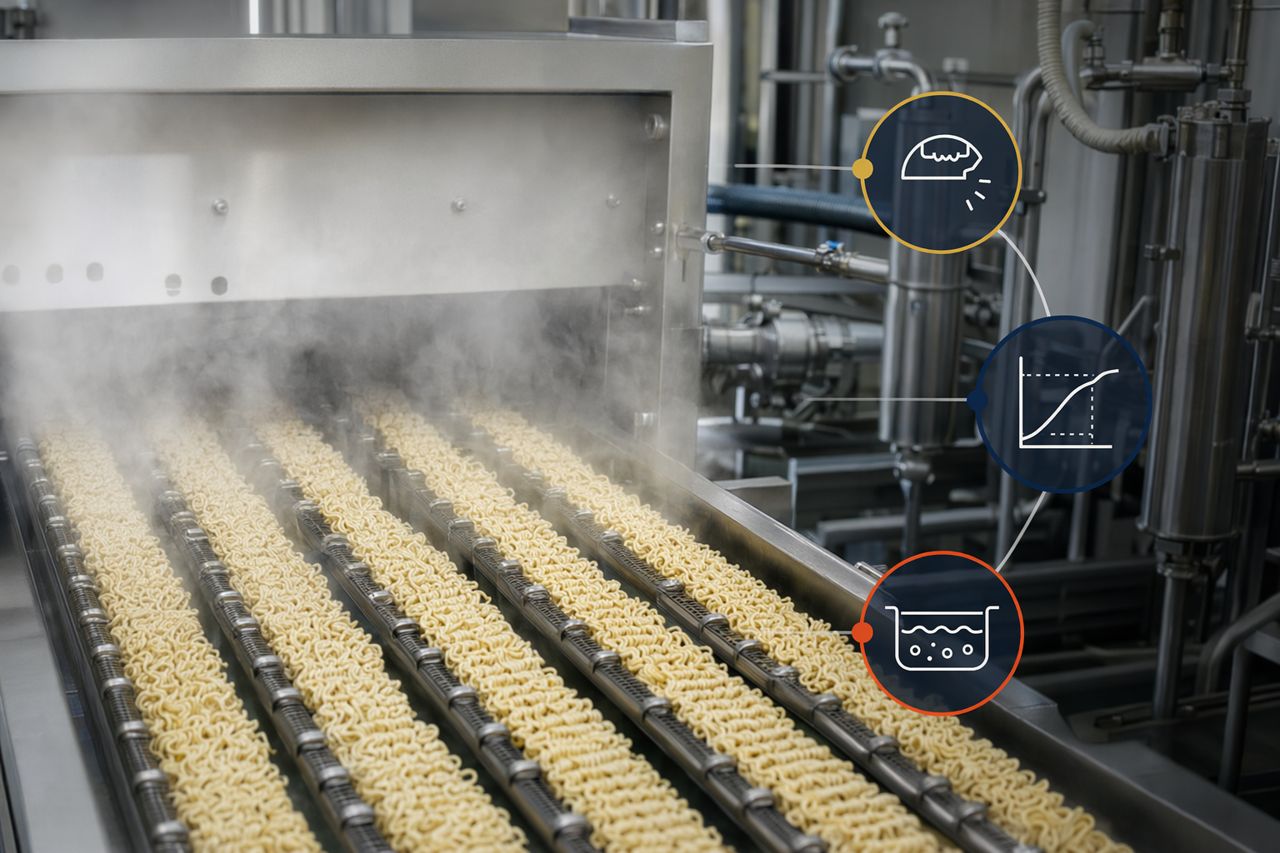
Instant noodle texture is created across the full production path: hydration, mixing, resting, sheeting, slitting, steaming, drying or frying, and final rehydration. Small changes in flour quality, water absorption, starch behavior, or dough strength can shift bite firmness, strand elasticity, surface smoothness, and cooking loss.
StrandPilot is an enzyme supplier for noodle manufacturing focused on turning those formulation variables into predictable factory outcomes. We help R&D and production teams select enzyme systems that support defined texture targets, stable sheeting, and repeatable cooked-noodle quality.
Texture control starts before the noodle is cooked
For instant noodle manufacturers, texture is not one parameter. It is a set of linked targets:
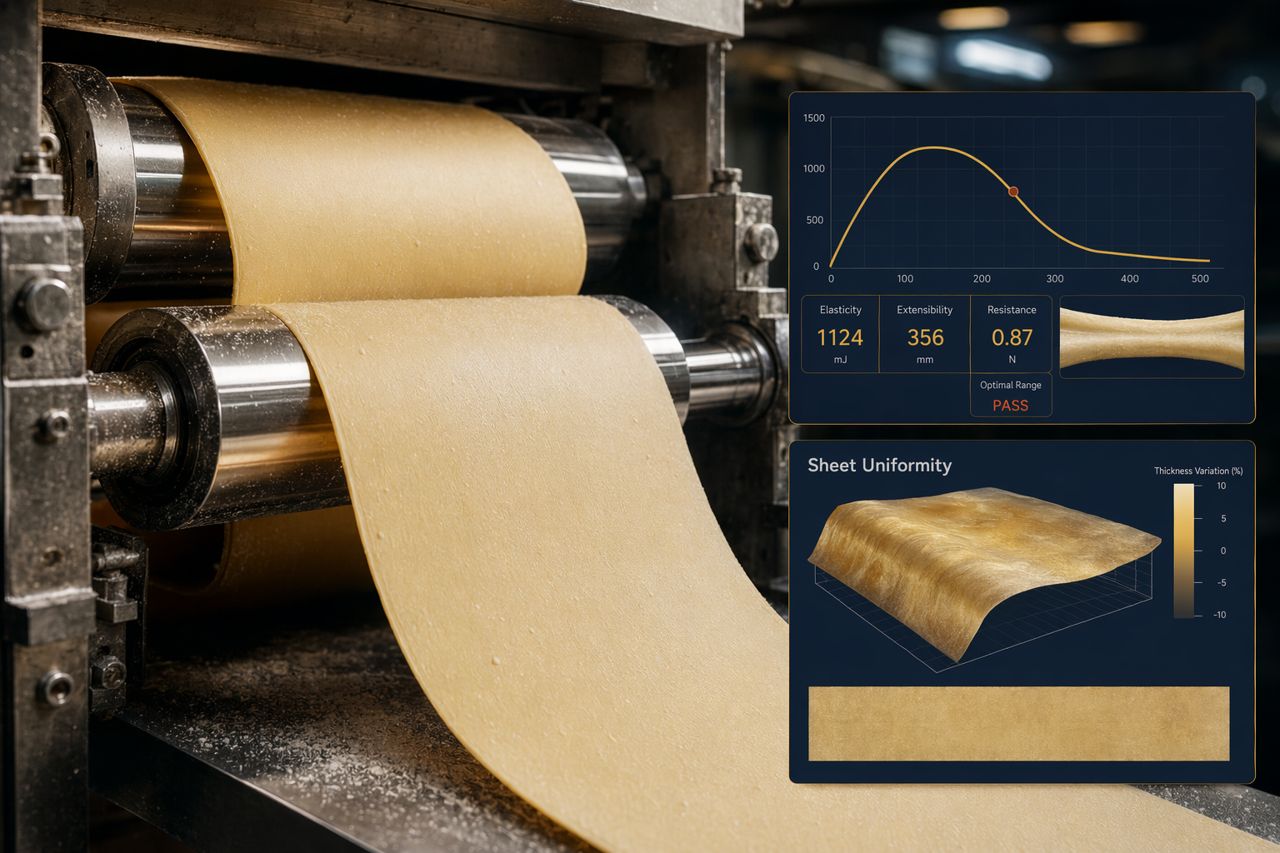
- Dough sheet extensibility without tearing or excessive stickiness
- Smooth ribbon formation through rollers and cutters
- Elastic bite after rehydration
- Controlled surface softness without mushiness
- Reduced cooking loss and cleaner broth appearance
- Sensory consistency when flour lots change
- Stable performance during scale-up from bench trials to full production
Enzyme selection should be matched to the texture problem, not added as a generic processing aid. StrandPilot maps each application to the flour profile, line conditions, and finished noodle specification.
Enzyme classes for instant noodle dough texture
Xylanase for arabinoxylan-related dough behavior
Wheat flour arabinoxylans influence water distribution, dough viscosity, sheet formation, and strand surface quality. The right xylanase approach can help manage dough behavior where water binding and non-starch polysaccharides affect processing.
Potential production benefits include:
- More consistent dough sheet handling
- Improved ribbon smoothness during sheeting
- Reduced tendency toward uneven strand formation
- Better water distribution across the dough matrix
- Support for line stability when flour behavior varies
StrandPilot evaluates xylanase use by texture target. For some factories, the priority is smoother sheeting. For others, it is cleaner strand separation or more uniform hydration. The recommendation depends on the noodle format and production constraint.
Glucose oxidase for oxidative strengthening
Glucose oxidase can support oxidative strengthening within the dough system. In instant noodle production, this can help when the target is firmer bite, improved elasticity, and better dough resilience under mechanical stress.
Potential production benefits include:
- Stronger dough structure during sheeting and cutting
- Improved elastic bite after cooking or rehydration
- Greater tolerance to flour strength variation
- Support for strand integrity through steaming and drying or frying
- Better control of overly soft or weak dough behavior
This is especially relevant when manufacturers need a more resilient noodle without relying only on flour specification changes. StrandPilot helps define the strengthening window so the dough remains workable on the line.
Amylase for starch and process-related texture support
Starch behavior affects surface feel, cooking performance, and final eating quality. Amylase selection can support starch-related processing behavior where the goal is to tune texture, rehydration, or sensory consistency.
Potential production benefits include:
- More controlled cooked-noodle surface texture
- Support for rehydration performance
- Adjustment of perceived softness or bite balance
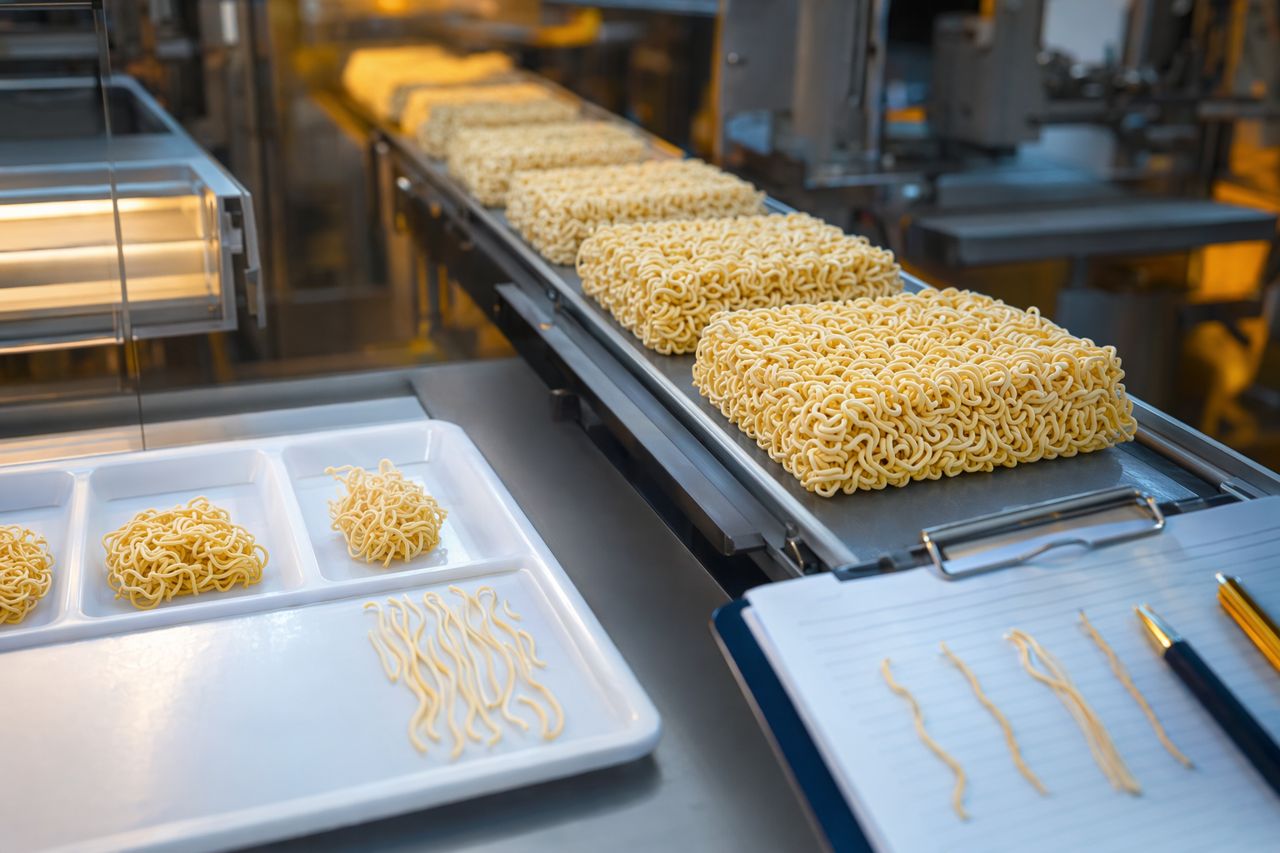
- Improved consistency in finished blocks
- Assistance in managing starch-driven process variation
Amylase use must be aligned with the process. In instant noodle lines, steaming, drying, frying, and final preparation conditions all influence whether the effect supports the intended texture outcome.
Match the enzyme choice to the texture target
| Texture or process target | Likely enzyme direction | What R&D should evaluate |
|---|---|---|
| Dough sheet is tight, uneven, or difficult to roll | Xylanase-led approach | Sheet smoothness, strand uniformity, hydration behavior |
| Noodles lack elastic bite or break too easily | Glucose oxidase-led approach | Dough strength, strand resilience, cooked bite firmness |
| Cooked noodles feel overly pasty or inconsistent | Amylase-supported approach | Surface feel, rehydration curve, cooking loss, sensory balance |
| Flour lots create variable dough behavior | Combined enzyme system | Line tolerance, batch consistency, adjustment range |
| Bench trial works but line trial drifts | Scale-up review | Mixing, resting, roller pressure, steaming, drying or frying interaction |
Built for instant noodle factory scale-up
A useful enzyme recommendation must survive production realities. StrandPilot supports R&D teams with application guidance that reflects factory constraints:
- Flour and starch blend differences
- Water addition and mixing profile
- Resting time and dough sheet relaxation
- Roller compression and sheet thickness strategy
- Slitting behavior and strand separation
- Steaming conditions
- Drying or frying impact on finished block texture
- Rehydration and final sensory expectations
We do not position enzyme selection as a one-step fix. We use it as part of a controlled formulation and process strategy.
Practical outcomes for noodle manufacturers
StrandPilot enzyme systems are designed to help manufacturers pursue measurable production goals:
- Narrower texture variation between batches
- Faster R&D screening of dough-strength and bite targets
- More predictable line behavior during flour changes
- Better alignment between trial results and production scale
- Cleaner decision-making when balancing elasticity, softness, and cooking performance
The result is a more controlled path from formulation idea to finished noodle block.
When to contact StrandPilot
Talk to us if your instant noodle team is working on:
- Firmer bite without sacrificing processability
- Smoother sheeting and more uniform strands
- Lower cooking loss and cleaner eating quality
- Better rehydration performance
- Reduced sensitivity to flour lot variation
- Reformulation for cost, texture, or supply-chain reasons
- Scale-up of an enzyme-supported noodle texture concept
Request a quote
Share your noodle type, flour base, process outline, and target texture. StrandPilot will recommend a practical enzyme direction for your R&D trial plan and production goals.
Use the on-site request a quote form to start a technical conversation with StrandPilot.